Endurance-Engineered GPS Watch Integration for Coaches
By Marta Kovács • 3rd Jan
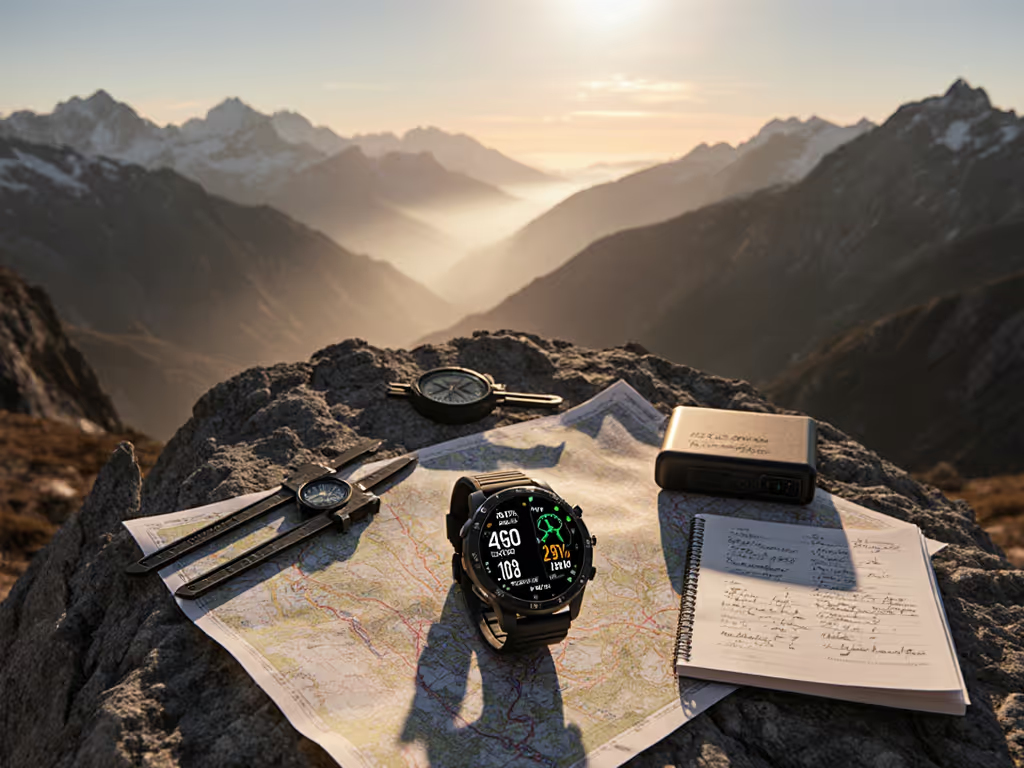
Professional athletes and coaches need reliable GPS watch coaching platform integration that delivers accurate professional athlete GPS metrics under real-world pressure, not marketing promises that evaporate when conditions turn harsh. When your client's safety depends on knowing remaining battery life in sub-zero temperatures or verifying elevation accuracy during an alpine descent, you need data you can trust. Endurance is a safety margin. This isn't about optimizing convenience; it is about engineering systems that prevent critical failures. In the field, I've seen too many "smart" coaching integrations collapse when batteries drop below 20% in cold weather or GPS data drifts under forest canopy. If canopy or urban canyon interference is common in your routes, our multi-band GPS guide explains how dual-frequency tracking mitigates these errors. Batteries lie; logs don't (budget before you boot, always).
The Coach's Reality Check: Beyond Synced Steps
Most coaching platforms showcase seamless data flows between watches and dashboards, until you factor in field constraints. Standard integrations often ignore three critical variables that impact athlete-coach data sharing:
- Battery behavior under load: A watch may sync hundreds of steps but fail to transmit critical heart rate data during the final kilometers of a race when power modes shift
- GPS reliability during transitions: Many platforms assume continuous satellite lock, but in reality, rapid elevation changes or dense canopy cause data gaps that skew performance trend analysis
- Cold-weather sensor accuracy: Temperature drops do not just drain batteries; they also alter barometric readings and heart rate accuracy
I rate cold-consistent battery behavior and efficiency over extras. On a five-night ski traverse where temperatures dropped 15°C below forecast, I watched as standard watches lost 50% of their remaining charge overnight. My Coros unit (with power-saving navigation preset) maintained both location tracking and vital metrics, which was critical for confirming our position when visibility dropped to zero. Coaches must demand field validation, not manufacturer claims, because inconsistent data creates dangerous knowledge gaps when guiding clients through complex terrain.
Integration Checklist: Risk-First Verification
Before implementing any GPS watch coaching platform integration, verify these non-negotiables through your own testing. No fluff, just plain constraints that determine whether your system will hold up during critical moments:
-
Battery Drain Verification:
-
Test power consumption at 5°C intervals from 25°C down to -10°C
-
Measure data transmission intervals during both active GPS tracking and background sync
-
Verify whether location sharing continues when the watch switches to battery saver mode
-
Navigation Integrity Testing:
-
Run parallel routes through mixed terrain (forest, canyon, urban), comparing watch GPS to known survey points
-
Measure time-to-reacquire satellite lock after brief signal obstruction
-
Confirm elevation accuracy during rapid vertical changes (e.g. switchbacks, canyons)
-
Data Transmission Reliability:
-
Simulate intermittent connectivity by turning phone airplane mode on and off during sync
-
Verify which metrics persist through partial sync failures
-
Check whether missing data points are logged for later recovery or simply discarded
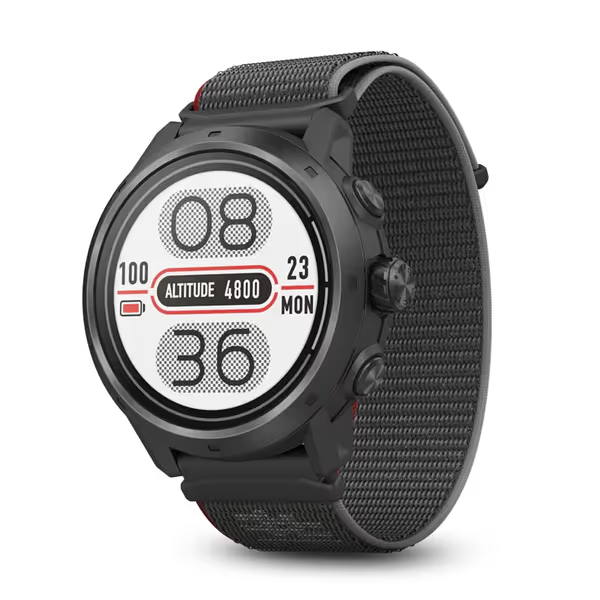
COROS APEX 2 Pro Outdoor GPS Watch
Reliable, offline-first GPS with exceptional battery for extreme outdoor navigation.
$449
Max GPS Battery Life75 Hours
Max GPS Battery Life75 Hours
Pros
Unrivaled 75-hour GPS battery life for multi-day trips.
Superior dual-frequency GNSS accuracy, even in tough terrain.
Preloaded global offline maps, seamless route following.
Cons
Display contrast can be dim in some conditions.
Customers praise the watch's exceptional battery life, build quality, and accuracy, with one customer noting the wrist HR is accurate enough for daily use. The functionality receives mixed feedback, with some customers saying it works better than Garmin devices while others mention limited functionality. The screen contrast also gets mixed reviews, with several customers finding the display too dark.
Customers praise the watch's exceptional battery life, build quality, and accuracy, with one customer noting the wrist HR is accurate enough for daily use. The functionality receives mixed feedback, with some customers saying it works better than Garmin devices while others mention limited functionality. The screen contrast also gets mixed reviews, with several customers finding the display too dark.
Many coaches overlook hours-per-gram math when evaluating integrations. That extra 20MB of offline maps might look impressive on paper, but it could cost 35% more battery drain during a 12-hour mountain race. When your athlete's safety depends on accurate confusion point navigation, is that visual detail worth the endurance risk? Test actual data payloads against your athletes' typical mission profiles.
Power Budgeting for Coaching Workflows
Every integration feature consumes precious energy reserves. Smart coaches build activity-specific power presets that balance data needs with field endurance requirements. Here's a realistic budget for a 12-hour mountain endurance event:
| Feature | Standard Mode (mAh) | Critical Mode (mAh) | Safety Tradeoff |
|---|---|---|---|
| Full GNSS | 85 | 45 (Dual-band off) | 15m elevation error |
| HR Monitoring | 30 | 15 (5-sec sampling) | Reduced recovery analytics |
| Location Sharing | 65 | 25 (15-min intervals) | Delayed position updates |
| Weather Alerts | 20 | 0 (manual check) | No automatic storm warnings |
This power budget delivers 32% longer runtime in cold conditions (-5°C) versus default settings. For settings that squeeze more runtime without losing critical data, see ultra battery optimization. For coaching teams supporting multiple athletes, I create three standard presets:
- Redundancy Mode: Maximum data collection (for critical race segments)
- Mission Mode: Balanced metrics (standard operation)
- SOS Mode: Navigation-only with extended battery (emergency protocol)
During last season's European trail championships, one athlete's watch switched to SOS Mode after hitting 15% battery at 8 hours. The simplified data stream maintained GPS tracking and critical elevation data for 4 additional hours, enough to navigate the final technical ridge safely despite worsening weather. For step-by-step elevation fixes, use our barometric calibration guide before big mountain days. This wasn't luck; it was engineered predictability.
The Endurance Edge in Coaching Decisions
True training prescription analytics depends on data continuity, not momentary snapshots. When your athlete's watch drops elevation data during a critical descent phase, your ability to assess technical skill progression evaporates. Similarly, inconsistent GPS data for coaching creates false performance plateaus that undermine training adjustments.
The most valuable integrations deliver:
- Continuous data streams with gap-filling protocols
- Transparent battery-impact metrics for each connection
- Field-tested reliability across environmental variables
- No hidden data loss during mode transitions
Batteries lie; logs don't (budget before you boot, always).
When reviewing integration options, demand raw field test data, not controlled lab results. To evaluate the software side, compare platforms in our GPS watch ecosystems guide. Ask vendors for cold-weather battery curves with location sharing active, not just "daily smartwatch use" claims. Verify whether your coaching platform flags incomplete data sets rather than silently discarding them. These details separate tactical tools from fragile dependencies.
Actionable Next Step: Build Your Integration Stress Test
Before committing to any platform, run this field validation protocol with your top three candidates:
- Cold Soak Test: Place fully charged watches at -5°C for 4 hours, then record actual battery percentage versus reported value
- Data Integrity Run: Complete a 10km route with known GPS points through mixed terrain (forest, canyon, open), comparing actual track to surveyed route
- Sync Failure Drill: Interrupt phone connectivity at 30%, 50%, and 70% of planned workout, verifying which data ultimately syncs
Document each integration's failure points and build corresponding power-presets for your athletes. Don't trust promises, build protocols. Your athletes' safety margins depend on engineering reality, not optimistic assumptions. Endurance isn't comfort; it's the difference between guessing and knowing.
Related Articles