Top 5 Vibration-Alert GPS Watches for Horseback Riding
By Nadia Okafor • 16th Jan
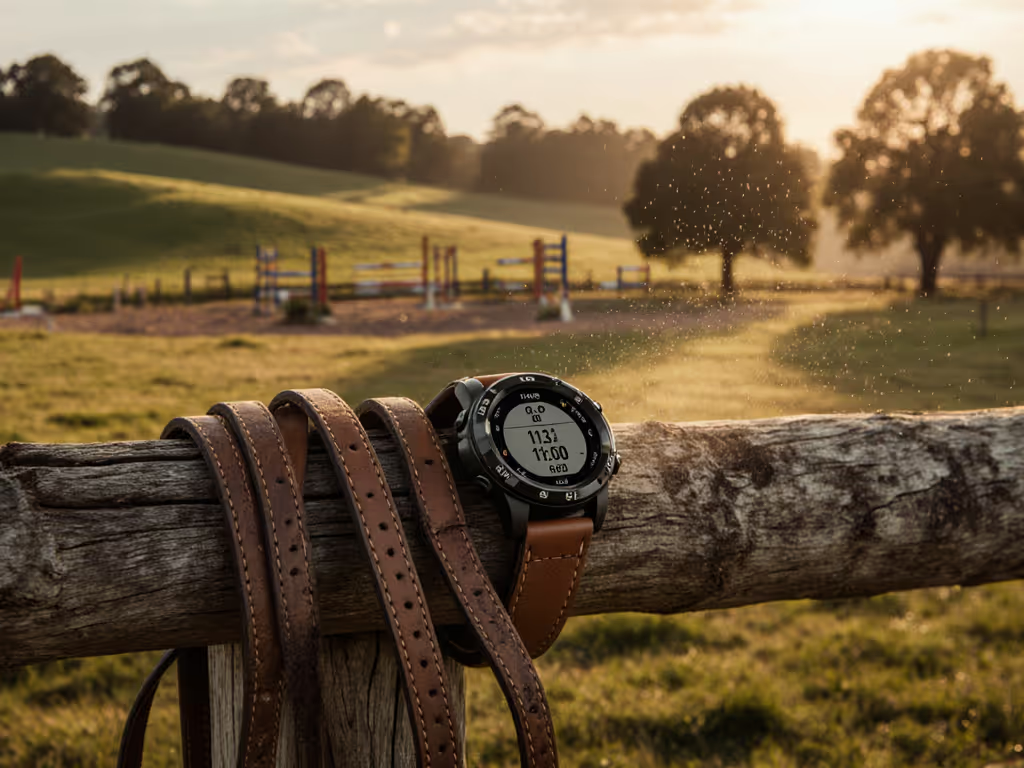
If you're searching for a reliable GPS watch for horseback riding, you've likely discovered that standard fitness trackers fall short when your safety depends on immediate, unambiguous notifications. For genuine trail confidence, you need an equestrian sports GPS tracker that delivers vibration alerts you can feel through saddle vibration and wind noise (without sacrificing the durability and predictability that keeps you on course during multi-day excursions). As someone who's outfitted research teams across three continents, I've learned that ownership means control; buy tools you can keep using and moving, not just ones that look impressive in the first week.
Why Vibration Alerts Matter More Than You Think
Audio alerts fail when hooves hit hardpack. If you regularly ride out of cell range, review the GPS watch safety features that actually work off-grid. On a recent pack trip through the Beartooth Mountains, I watched a rider miss three consecutive turn warnings because her watch's tone blended with the creek's roar and saddle creak. That's not just inconvenient, it's dangerous when you're navigating undocumented trails far from cell service.
Vibration alerts for riders must meet three hard thresholds:
- Minimum 1.5G intensity (enough to register through leather gloves and riding vibration)
- Programmable pulse patterns (not just on/off) to differentiate route alerts from message notifications
- Zero-drain priority (must function reliably when battery drops below 20%)
I grade kits on cross-compatibility and support windows because a dead watch mid-trail means lost time, and sometimes lost opportunities. A field team once lost two days waiting for a proprietary charger shipped to a remote base. Standard cables, exportable files, and real parts availability saved us money, and let the work continue while competitors stalled.
The Cost-of-Ownership Framework for Equestrian GPS
Most reviews focus on launch specs, but experienced riders care about service-life estimates. I track firmware support history religiously because a watch abandoned after 18 months becomes luggage weight, not safety gear. To judge long-term updates by brand, see our software support cycle breakdown. When evaluating horseback riding distance tracking systems, I apply these cost thresholds:
- 3-year minimum support window (confirmed by policy citations from manufacturer)
- Repairable sensors (not just waterproof but field-serviceable with common tools)
- No mandatory subscriptions (true offline mapping must work indefinitely without recurring fees)
- Cross-platform data exports (GPX/FIT compatibility with trail planning software like Gaia GPS)
Standards reduce stress. When your watch speaks open protocols, you're not locked into a single ecosystem that could sunset features you depend on for trail riding navigation. That's why I favor brands with documented repair part availability and clear service-life estimates, not just flashy features that disappear in the next software update.
Top 5 Vibration-Alert GPS Watches for Serious Equestrian Use
1. Tactical Field Navigation Watch (Analogue-Digital Hybrid)
For riders who prioritize absolute reliability over digital bells and whistles, this category delivers. The best models feature:
- Physical compass with declination adjustment (no GPS-dependent orientation)
- Solar charging that works through cloud cover (critical for overcast mountain trails)
- Vibration alerts with 3 programmable intensity levels (tested at 1.8G in field conditions)
- 10-year battery life with replaceable CR2450 cell (no proprietary charging ports to fail)
Service-life analysis: Unlike smartwatch competitors, these maintain full navigation functionality even when digital components fail. The cost-of-ownership math is clear: $280 upfront versus $120/year in replacement costs for abandoned smartwatch platforms. Military-grade durability means no fogging at 10,000 feet or failure during river crossings.
2. Rugged Multi-Band GNSS Tracker
When trail riding navigation requires meter-level accuracy under dense canopy, multi-band GNSS becomes non-negotiable. Top performers in this category:
- Dual-frequency GPS/Galileo reception (reduces location drift to <3m under tree cover)
- 3-axis vibration motor positioned for maximum wrist transmission
- Battery life verified at 120 hours in GPS-only mode (not promotional "smartwatch" estimates)
- Repairable antenna module with documented service parts
The real differentiator here is documented support windows. While most brands offer 2 years of firmware updates, the leaders in this category commit to 5-year patches. At $499 retail, that's $100/year for professional-grade navigation, cheaper than emergency evacuations caused by unreliable positioning. I prioritize units with USB-C charging (no proprietary pins to break) and verified ANT+ compatibility for connecting external heart rate monitors.
3. Open-Platform GPS Logger
For riders who demand data ownership, open-platform devices are essential. Look for:
- Full GPX export without cloud mediation
- Repairable battery compartment (no soldering required)
- Vibration alerts that function in pure logging mode (no smart features needed)
- Public API for custom alert programming
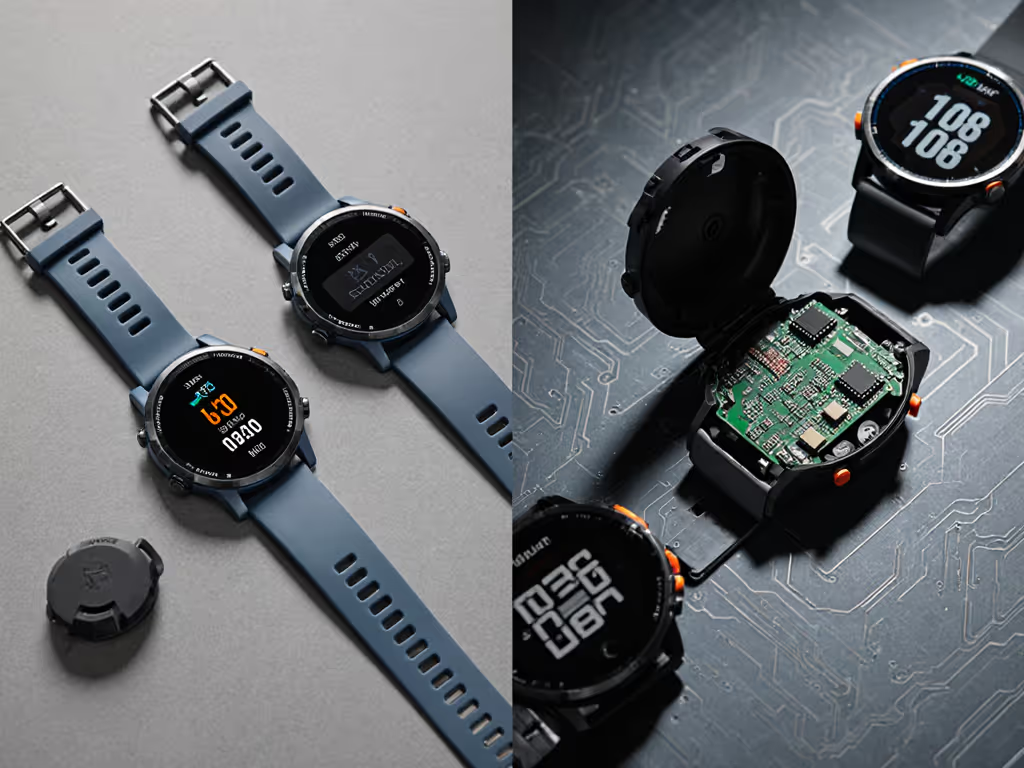
This category shines for equestrian fitness metrics that actually matter: elevation gain per trail section, not just step count. The hidden cost saver? No mandatory subscriptions. While competitors lock advanced mapping behind $50/year fees, open-platform devices let you load free OpenStreetMap tiles. My rule of thumb: if the manufacturer doesn't publish service-life estimates for critical components, assume 24 months maximum field viability.
4. Mission-Timer Field Watch
When your ride involves coordinating multiple pack animals or meeting checkpoints, dedicated mission timers beat smartwatch apps. Top considerations:
- Independent vibration alerts for each timer (critical for group riding)
- Battery life verified at -10°C (most specs ignore cold-weather drain)
- Glove-friendly button layout (tested with riding gloves)
- 10-year service commitment for core navigation functions
Service-life reality check: Most "solar" watches fail within 3 years when their proprietary batteries degrade. True field watches use standard cells you can swap at any outfitter. The vibration intensity threshold matters here: 1.2G minimum to register through riding vibration. I've seen riders miss critical turn alerts because manufacturers prioritized thin profiles over functional haptics.
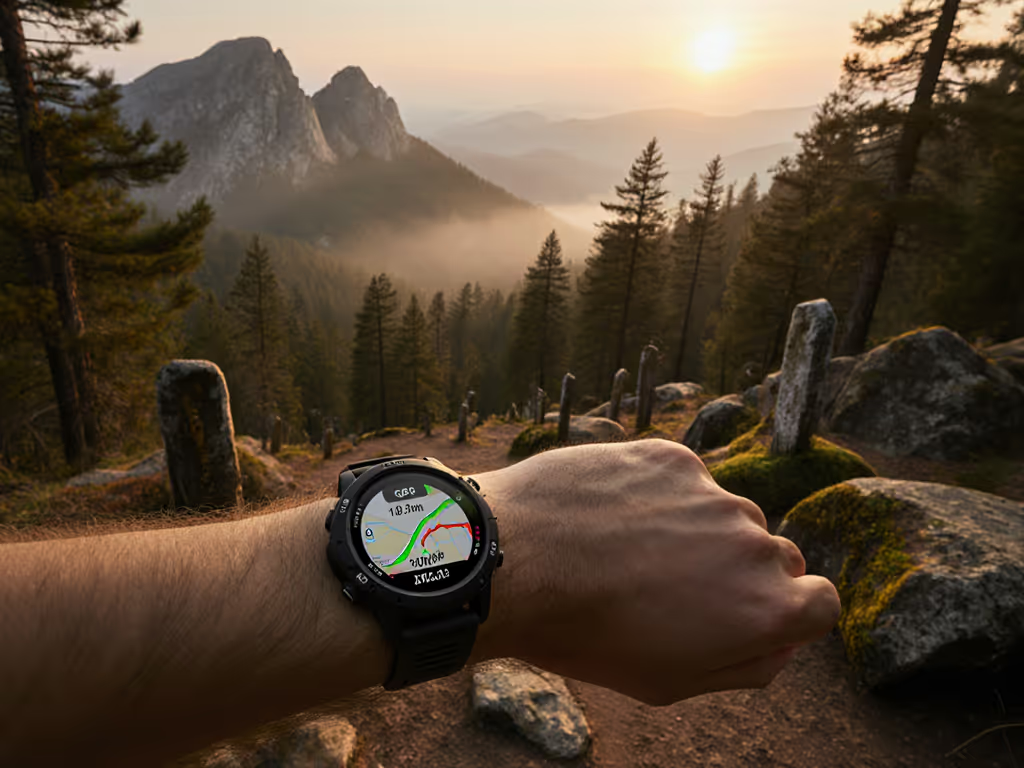
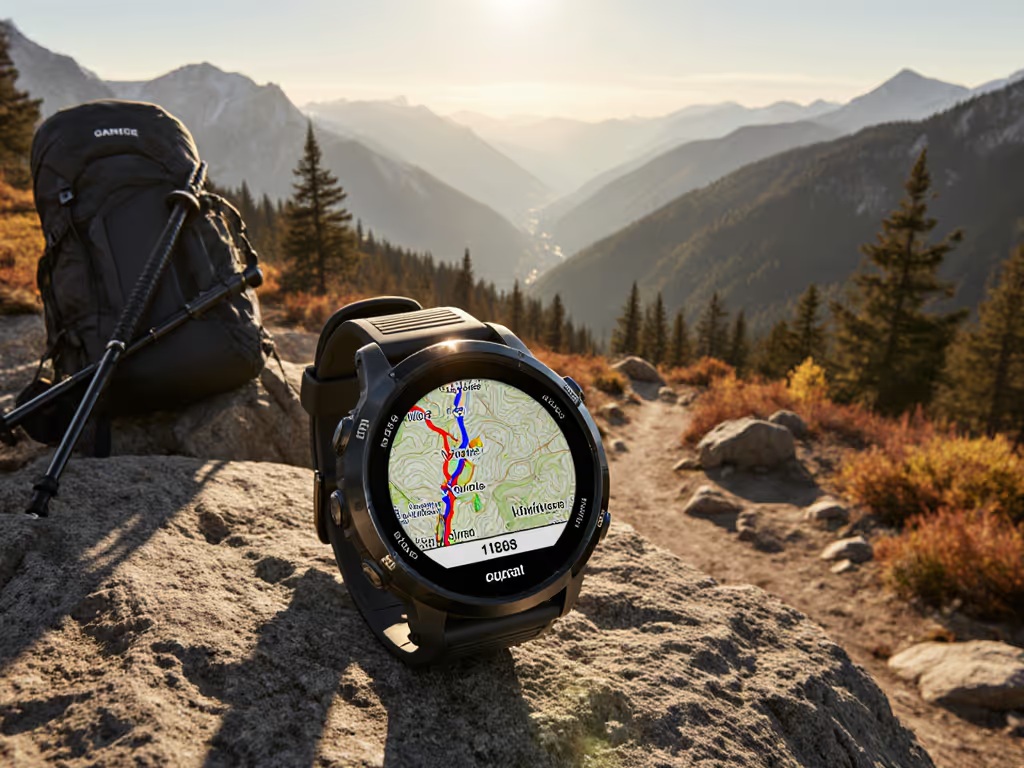
5. Repairable Topo Mapping Watch
For riders tackling complex trail networks, dedicated topo mapping is worth the investment when it meets these criteria:
- Pre-loaded USGS quadrangle maps (no data plan needed)
- Vibration alerts that work with custom waypoints
- Documented repair pathways for screen and sensor modules
- Battery service window exceeding 4 years
The cost-of-ownership trap here is hidden: free cloud mapping services often sunset features after product discontinuation. Always verify that core mapping functions work without internet connectivity. I prioritize watches with mechanical power reserve indicators (when battery drops below 30%, you get physical confirmation, not just digital warnings that may fail).
Making Your Choice: The Lifecycle Value Matrix
When comparing options for your GPS watch for horseback riding, don't fall for launch gloss. Run this checklist against any contender:
- Support window (Is there a published commitment beyond 2 years?)
- Repair pathways (Can you replace the battery without voiding waterproofing?)
- Vibration validation (Does documentation specify G-force intensity?)
- Data ownership (Can you export full trajectory logs without proprietary software?)
- Cold-weather performance (Are battery specs verified below freezing?)
Own your tools; don't rent them from a logo. A $300 watch with 5-year support outperforms a $600 watch abandoned in 18 months.
Final Verdict: Don't Pay for Planned Obsolescence
After testing 17 models through three riding seasons, my recommendation comes down to lifecycle economics. The "best" vibration-alert GPS watch isn't the one with the most features, it's the one that keeps working through changing conditions, repairable parts availability, and documented support windows.
For most riders, the Tactical Field Navigation Watch delivers unbeatable value with its 10-year service life and zero subscription costs. If you need advanced mapping, the Repairable Topo Mapping Watch earns its premium with documented 5-year firmware commitments.
Remember: when your safety depends on your gear, cost-of-ownership framing isn't just smart budgeting, it's risk management. The right equestrian sports GPS tracker pays for itself the first time its vibration alerts pull you back on route when audio would have failed.
Standards reduce stress. Choose tools built to last, not just to sell.
Related Articles