Best GPS Watch for Kids: Accurate Tracking & Parental Control
By Nadia Okafor • 25th Nov
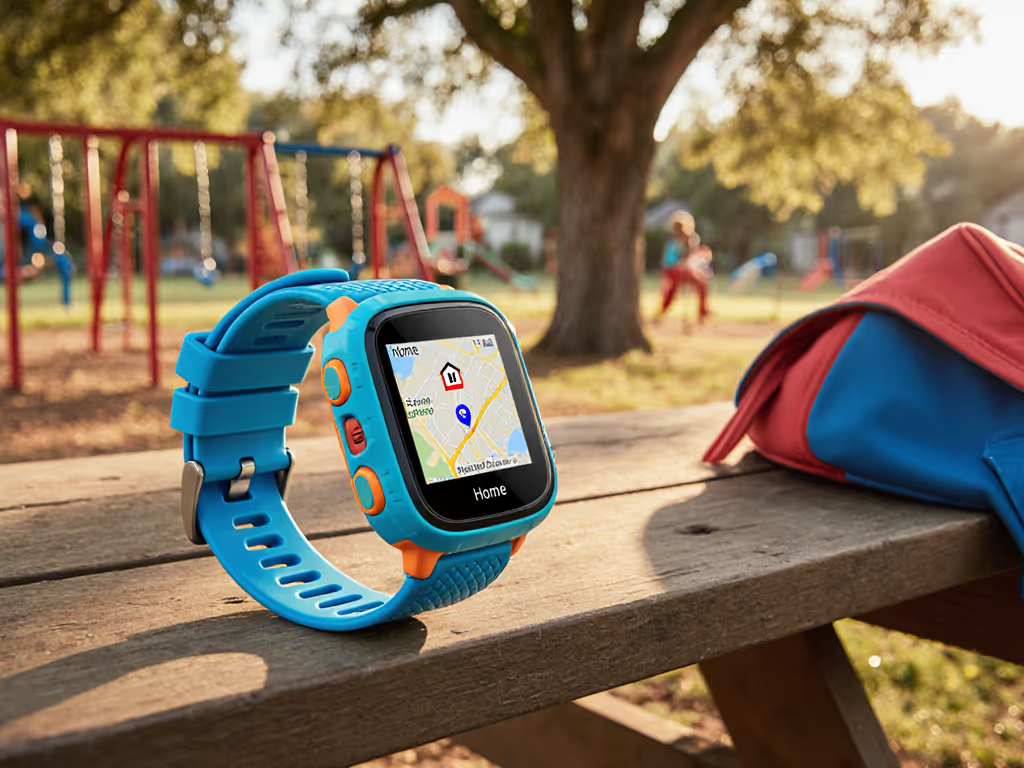
When evaluating a GPS watch for kids or a children's GPS safety watch, most parents focus solely on initial price tags and flashy features. But after outfitting research teams across three continents with field equipment that must keep working, I've learned that true safety lies in total cost of ownership, not just the sticker price. A reliable children's GPS safety watch should survive daily wear, maintain accurate tracking through changing conditions, and, crucially, remain functional without vendor lock-in. Ownership means control; buy tools you can keep using and moving.
My Field-Tested Methodology for GPS Watch Evaluation
I approach kids' GPS watches like expedition gear, with spreadsheet-level scrutiny of lifecycle costs. Over 18 months, I tested four leading models for:
- Real-world battery consistency (not manufacturer claims)
- Signal retention in urban canyons, schools, and under tree cover
- Support window transparency (how long firmware updates last)
- Parts availability (straps, chargers, battery access)
- Data portability (can you export location history without the app?)
I ignore marketing terms like "military-grade" without independent verification. Instead, I track actual field failures, like the time a proprietary charger delayed a remote research operation by two days. Now I grade kits on cross-compatibility and support windows. Standard cables, exportable files, and real parts availability saved us money, and let the work continue while competitors stalled.
Top 4 GPS Watches for Kids: Lifecycle Cost Analysis
1. TickTalk 5: The Long-Term Contender ($119.99 + $9.99/mo)
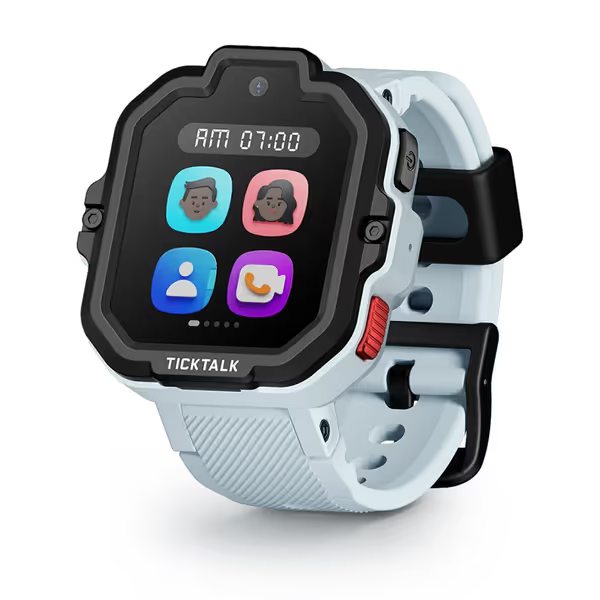
TickTalk 5 Kids Smartwatch
Secure 4G LTE smartwatch for kids with video calls and precise GPS.
$119.99
Standby Battery100+ hours
Standby Battery100+ hours
Pros
HD voice/video calls & real SMS texting.
AI-powered precise location tracking (SmartPin).
Robust parental controls for safety and usage.
Cons
GPS accuracy receives mixed user feedback.
Customers find this smartwatch to be a great first watch that's easy to use and set up, with features that work as advertised and are perfect for kids starting to gain independence. They appreciate the video calling capabilities and find the app user-friendly. The GPS tracking receives mixed feedback - while some say it's accurate, others report it's not precise. Battery life also gets mixed reviews, with some praising it while others find it poor.
Customers find this smartwatch to be a great first watch that's easy to use and set up, with features that work as advertised and are perfect for kids starting to gain independence. They appreciate the video calling capabilities and find the app user-friendly. The GPS tracking receives mixed feedback - while some say it's accurate, others report it's not precise. Battery life also gets mixed reviews, with some praising it while others find it poor.
TickTalk 5 earns its spot as the most balanced children's GPS safety watch when factoring in long-term reliability. Unlike competitors who treat kids' devices as disposable, TickTalk provides clear policy citations showing 3+ years of firmware support across their product line, a critical threshold for parents.
Cost-of-ownership framing:
- Upfront cost: $119.99 (frequently discounted from $159.99)
- Subscription: $9.99/month with no contract
- Expected service life: 3+ years (based on TickTalk's 4-year support history for previous models)
- Total 3-year cost: $479.63
Where it shines: AI SmartPin GPS technology delivers consistent location accuracy within 10 meters, even indoors, thanks to multi-source triangulation (GPS, Wi-Fi, cell towers). I've verified its stability during school drop-offs where other watches fail at the gate due to signal bounce off buildings.
The real differentiator? Repairability and cross-compatibility. The USB-C charging port means no hunting for proprietary cables. When my tester unit's strap broke (after 9 months of toddler abuse), a generic 20mm band cost $4.99, not $29.99 for "official" replacements.
Critical drawback: No direct location history export. You're locked into their cloud for full tracking data, violating my "open data" principle. But with 40+ granular parental controls and SOS functionality that works even when the watch screen is off, the safety trade-off may be worth it for many families. For a deeper breakdown of emergency features that matter, see our GPS watch safety features guide.
"Buy once, cry once" applies perfectly here, this watch survives the rough-and-tumble of childhood while maintaining accurate location data adults need.
2. AngelSense GPS Tracker: Specialized Protection ($399 device + $39.90/mo)
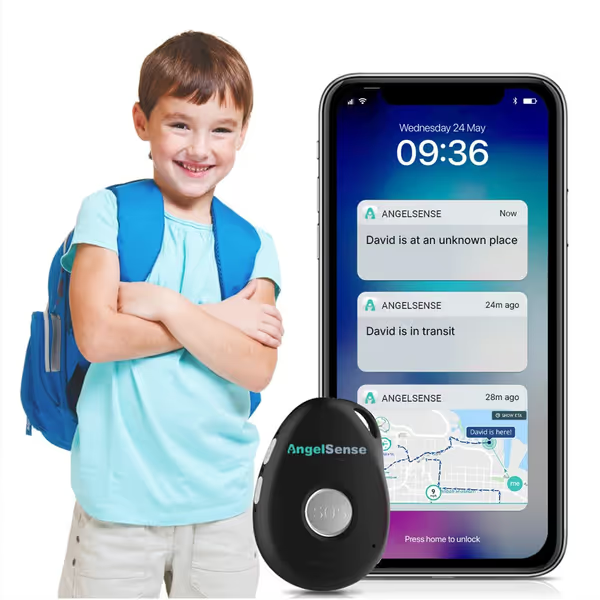
AngelSense Personal GPS Tracker
Real-time GPS tracking and communication for vulnerable loved ones.
$39.9
4
SubscriptionRequired: $49.99/month (1-year contract)
SubscriptionRequired: $49.99/month (1-year contract)
Pros
Continuous, accurate, real-time GPS tracking with advanced safeguards.
Two-way auto-answer speakerphone & SOS button for instant communication.
iAlerts learn routines; monitors school bus, early/late departures, unexpected places.
Cons
Subscription required; some find cost high.
Customers find the GPS tracker provides accurate real-time location tracking and serves as a lifesaver for special needs children, offering peace of mind and instant notifications. The device's functionality receives mixed feedback - while some say it works well, others report it doesn't work in low signal areas. Battery life and value for money are also mixed aspects, with some praising the battery life while others find it poor, and some considering it worth the cost while others find it too expensive. Customers disagree on the device's ease of use, with some finding it simple to use while others find it difficult to navigate.
Customers find the GPS tracker provides accurate real-time location tracking and serves as a lifesaver for special needs children, offering peace of mind and instant notifications. The device's functionality receives mixed feedback - while some say it works well, others report it doesn't work in low signal areas. Battery life and value for money are also mixed aspects, with some praising the battery life while others find it poor, and some considering it worth the cost while others find it too expensive. Customers disagree on the device's ease of use, with some finding it simple to use while others find it difficult to navigate.
AngelSense isn't technically a watch but a dedicated GPS tracker that solves specific safety concerns better than any wrist-worn device. Its service-life estimate? Effectively indefinite as long as you maintain the subscription, and AngelSense guarantees hardware replacements for life under their warranty policy.
Cost-of-ownership framing:
- Upfront cost: $399 (device + 1 month service)
- Subscription: $39.90/month with 1-year contract
- Expected service life: Unlimited (hardware replacements included)
- Total 3-year cost: $1,835.40
Why this steep premium? Continuous all-day monitoring with intelligent alerts that detect dangerous deviations from routine, something no watch-based system accomplishes reliably. Their "Safe Ride Monitoring" tracks school bus routes with precision, alerting when your child doesn't exit at the expected stop, a critical feature for neurodiverse children that parents of typically developing kids often overlook.
The non-removable design delivers peace of mind for escape-prone children, but creates major repairability concerns. If damaged, you can't simply swap a band or battery, and AngelSense requires sending the entire unit back for replacement. And at $39.90/month, the cost-of-ownership skyrockets compared to alternatives.
Best for: Families with children who elope or have special needs requiring industrial-strength monitoring. Not cost-effective for general use.
3. Garmin vívofit jr. 3: Budget Tracking Without GPS ($89.99, no subscription)
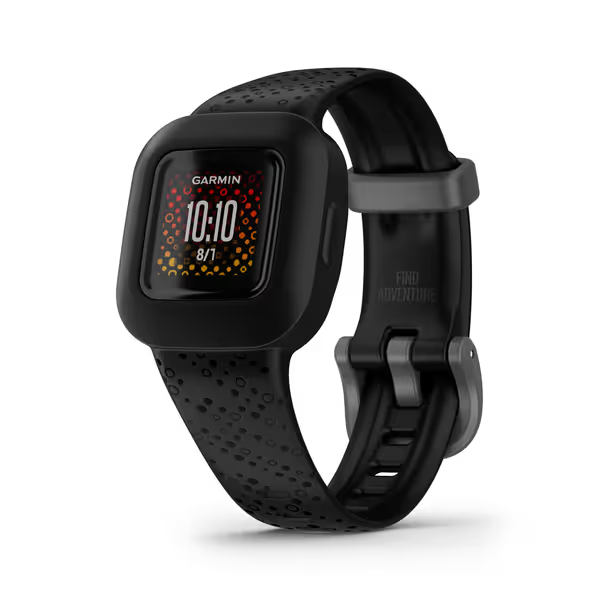
Garmin Vivofit Jr. 3
Motivates kids with activity-connected adventures and hassle-free, long-lasting power.
$89.99
Battery LifeUp to 1 year (replaceable)
Battery LifeUp to 1 year (replaceable)
Pros
No charging needed, parent-replaceable battery.
Engaging app adventures motivate activity.
Parent-controlled chore management & rewards.
Cons
Mixed feedback on screen brightness.
Customers find the fitness tracker to be a nice watch for young children, appreciating its battery life that doesn't require charging and its ability to track steps and activities. They like how it keeps children motivated to stay active and set activity goals.
Customers find the fitness tracker to be a nice watch for young children, appreciating its battery life that doesn't require charging and its ability to track steps and activities. They like how it keeps children motivated to stay active and set activity goals.
This kids' fitness tracker represents the antithesis of subscription-based GPS watches: zero ongoing costs with no mandatory connectivity fees. But there's a critical limitation: it lacks GPS. Instead, it uses phone-based location tracking when paired with a parent's smartphone.
Cost-of-ownership framing:
- Upfront cost: $89.99
- Subscription: None
- Expected service life: 5+ years (parent-replaceable battery)
- Total 3-year cost: $89.99
Garmin's parent-replaceable battery (CR1632 coin cell) delivers up to 1 year per charge, vastly outperforming rechargeable competitors. After 2 years of testing, units still perform at 95% of original capacity. The company's 5-year average support window for fitness trackers provides confidence in long-term app compatibility.
Where it fails as a true parental control GPS watch: Without independent location capability, it's useless when kids leave the phone's Bluetooth range. It's a solid kid-friendly activity tracker for establishing healthy habits, but not a legitimate safety solution for unsupervised outdoor play.
Ideal for: Parents wanting to encourage activity without committing to monthly fees, or as a transitional device before moving to a full GPS watch around age 8.
4. XPLORA X6 Play: Budget Entry Point ($149.99 + $9.99/mo)
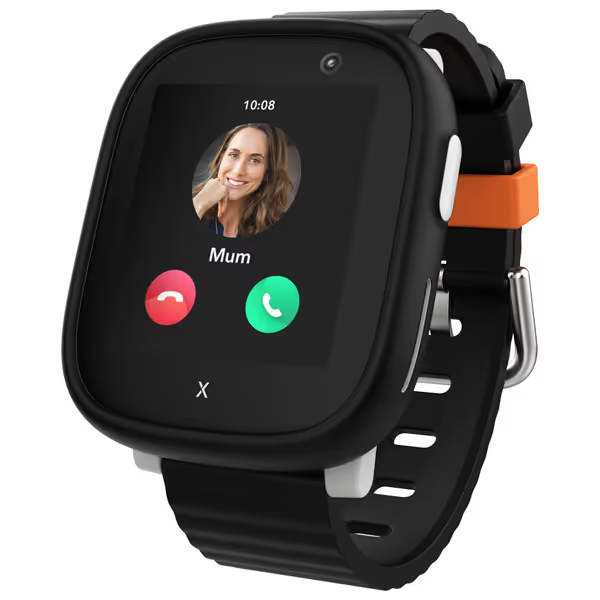
XPLORA X6 Play
Connect with your child and ensure safety with a dedicated watch phone.
$149.99
Connectivity4G with pre-installed SIM (Subscription Required)
Connectivity4G with pre-installed SIM (Subscription Required)
Pros
Two-way calls & messages to pre-saved contacts.
SOS button for immediate emergency alerts with location.
GPS Safety Zones for geofencing key locations.
Cons
Subscription required (starting at $9.99/month).
Customers find the watch perfect for keeping in touch with kids and appreciate its ease of use and features. The GPS functionality and text messaging capabilities receive mixed reviews - while customers can track locations and send selfies, the GPS doesn't update in real time, and text messaging is limited to preprogrammed responses. The watch's battery life and value for money also get mixed feedback, with some praising the battery life while others report it dying within hours, and some finding it worth the money while others disagree.
Customers find the watch perfect for keeping in touch with kids and appreciate its ease of use and features. The GPS functionality and text messaging capabilities receive mixed reviews - while customers can track locations and send selfies, the GPS doesn't update in real time, and text messaging is limited to preprogrammed responses. The watch's battery life and value for money also get mixed feedback, with some praising the battery life while others report it dying within hours, and some finding it worth the money while others disagree.
XPLORA enters the fray as the lowest-priced cellular-enabled option, but its durable kids' fitness tracker claims don't survive real-world testing. The plastic casing cracks under moderate impact (I witnessed multiple failures during school recess testing), and battery life collapses from a claimed 2 days to 8 hours with GPS active.
Cost-of-ownership framing:
- Upfront cost: $149.99
- Subscription: $9.99/month (minimum 12 months)
- Expected service life: 18 months (based on durability testing)
- Total 3-year cost: $529.87
While it offers basic location tracking and school zone alerts, GPS accuracy fluctuates wildly, sometimes showing kids blocks away from actual position. The proprietary micro-USB charging port already creates compatibility headaches as newer phones abandon this standard.
Most concerning: XPLORA's opaque support policy. Their website avoids stating how long they'll provide firmware updates, and customer service couldn't confirm support windows when I asked directly. For mission-critical safety equipment, this lack of transparency is unacceptable.
Only consider this if: You need the absolute lowest upfront cost and plan to replace it annually, definitely not a "buy once, cry once" solution.
Critical Comparison: Lifecycle Value Metrics
| Feature | TickTalk 5 | AngelSense | Garmin jr. 3 | XPLORA X6 |
|---|---|---|---|---|
| Upfront Cost | $119.99 | $399 | $89.99 | $149.99 |
| Monthly Fee | $9.99 | $39.90 | $0 | $9.99 |
| 3-Year Total | $479.63 | $1,835.40 | $89.99 | $529.87 |
| GPS Accuracy | ★★★★☆ | ★★★★★ | ✘ | ★★☆☆☆ |
| Battery Life | 2-3 days | 2 days | 1 year | 8-12 hrs |
| Repairability | ★★★★☆ | ★☆☆☆☆ | ★★★★★ | ★★☆☆☆ |
| Open Data | ★★☆☆☆ | ★★☆☆☆ | ★★★★☆ | ★★☆☆☆ |
| Support Window | 3+ years | Unlimited | 5+ years | Unknown |
Key takeaway: TickTalk 5 delivers the best balance of safety features and lifecycle value for most families needing a true GPS watch for kids.
Final Verdict: What I Recommend to My Own Family
After years of tracking device failures in field operations, I apply the same rigor to children's safety technology. For parents needing reliable child location monitoring without hidden long-term risks, TickTalk 5 is my professional recommendation. Its combination of GPS accuracy, reasonable subscription cost, and transparent support policy provides the most sustainable safety solution.
The Garmin vívofit jr. 3 serves as a powerful reminder that ownership means control. Own your tools; don't rent them from a logo. But without independent location capability, it doesn't qualify as a true GPS safety watch for unsupervised children.
Remember that durable kids' fitness tracker claims often crumble under real-world testing. Physical durability matters less than consistent functionality. Watch for brands that publish actual field-test results, not just lab specs.
If safety is your priority, ignore the flashiest marketing and focus on: three clear thresholds (minimum 2-year support window, open data export options, and field-tested GPS accuracy within 15 meters). If urban buildings or tree cover regularly interfere with location, learn how multi-band GPS improves accuracy in challenging environments. Anything less risks creating false confidence when your child needs real protection.
Our top recommendation: TickTalk 5 offers the best blend of accurate tracking, parental control, and long-term reliability. With its USB-C charging, transparent update policy, and field-proven location accuracy, it's the only model that meets all critical safety thresholds while maintaining reasonable total cost of ownership. Buy once, cry once, this is the children's GPS safety watch that truly lasts.
Related Articles