Interpret GPS Metrics for Masters Athletes: Age-Adjusted Targets
By Diego Álvarez • 8th Jan
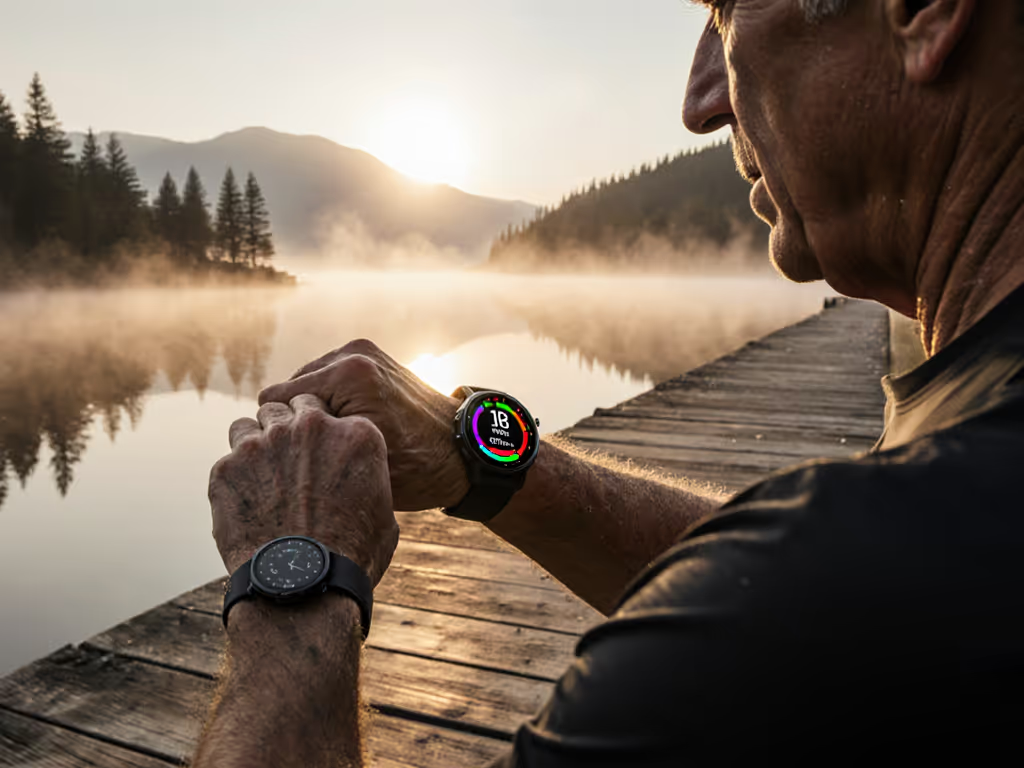
GPS metrics for masters athletes require specialized interpretation frameworks that account for physiological aging. Unlike standardized youth protocols, age-adjusted training metrics must balance performance goals with realistic recovery timelines and altered cardiovascular response. These interpretations form the foundation of sustainable training for athletes over 40, where a single metric without context can mislead as much as inform. As trail runners and field professionals know from experience, reliable navigation through complex terrain requires understanding both your tools and your changing capabilities. For a quick refresher on what each metric means and how devices calculate them, see our GPS watch metrics guide. Verify before you rely on any single data point when planning extended outings.
What makes GPS metrics interpretation different for masters athletes?
Masters athletes (typically defined as competitors aged 40+) experience physiological changes that alter how standard GPS metrics correlate with exertion and adaptation. Key differences include:
- Reduced VO₂ max: Declines approximately 10% per decade after age 30
- Slower recovery kinetics: Extended time required for physiological restoration
- Altered heart rate response: Maximal heart rate decreases by approximately 1 beat per year
- Changes in movement economy: Running/walking efficiency shifts with age-related biomechanical changes
Unlike youth sports where standardized metrics often apply across cohorts (as noted in studies examining soccer athletes aged 11-15), masters athletes require individualized baselines. What appears as "subpar" high-speed running distance may actually represent optimal training stimulus when adjusted for age-related physiological changes.
How should training load metrics be adjusted for age?
Masters training load requires recalibration across three dimensions:
| Metric | Standard Interpretation | Age-Adjusted Approach |
|---|---|---|
| Total Distance | Cumulative volume indicator | Quality > quantity; focus on specific intensity zones |
| High-Speed Running | Performance benchmark | Individualized thresholds based on current capability |
| Acceleration/Deceleration | Agility measure | Reduced frequency with increased recovery between efforts |
Recent research demonstrates that "using field tests to individualise speeds thresholds will allow accurate quantification of individual athlete intensity" (Abbott thesis). For a practical framework to turn those individualized thresholds into actionable training load decisions, use our training load analysis guide. This principle applies even more critically to masters athletes, where chronological age alone proves insufficient for determining appropriate training intensities. For trail runners navigating variable terrain, understanding your personalized high-intensity thresholds prevents overreaching on descents or technical sections where standard metrics might suggest greater capacity than exists.
Which GPS metrics should masters athletes prioritize?
Focus on these evidence-supported metrics when reviewing GPS data:
- Normalized intensity distribution: Rather than absolute speed zones, track percentage of time in your personalized intensity zones
- Recovery metrics for aging athletes: Heart rate recovery (HRR) at 1- and 2-minute intervals post-effort
- Progressive intensity accumulation: How metrics change across longer efforts (e.g., 20% drop in pace over 20 miles vs. 5% in youth)
- Contextualized elevation performance: Vertical gain/loss metrics adjusted for age-related power changes
For field professionals who regularly operate in remote areas, these metrics provide early warning signs of reduced resilience. During a volunteer search exercise years ago, teams that understood their members' current capabilities (not historical ideals) maintained effective operations when communication systems failed. The difference wasn't technology, but recognizing current physiological limits through simple, repeatable metrics.
How does aging affect recovery metrics interpretation?
Recovery metrics for aging athletes require distinct benchmarks:
- Heart rate recovery (HRR): Expect 10-15% slower HRR in masters athletes compared to same-effort in youth
- Training stress balance: Requires 20-30% more recovery time between high-intensity sessions
- Muscle soreness duration: Typically extends 24-48 hours longer after a similar effort
GPS systems that track heart rate variability (HRV), when properly calibrated to age, provide valuable insights into readiness. To understand when optical sensors are sufficient and when to use a chest strap or ECG for better accuracy, see our heart rate monitor accuracy guide. However, commercial devices often apply standardized algorithms that don't account for age-related autonomic changes. Masters athletes should establish personal baseline HRV metrics rather than relying on device-generated "recovery scores." As with any field navigation tool, understanding your system's limitations prevents dangerous assumptions.
What VO₂ max age interpretation strategies work best?
VO₂ max age interpretation requires rejecting absolute numbers in favor of trend analysis:
- Establish personalized baseline testing protocol
- Track rate of change (expected decline: 5-10% per decade with training)
- Correlate with GPS metrics like pace at lactate threshold
- Compare performance at standard routes/segments year-over-year
Rather than fixating on absolute VO₂ max numbers, masters athletes should focus on maintaining running economy (the distance covered per unit oxygen). A 55-year-old with 35 ml/kg/min VO₂ max who maintains pace on familiar trails demonstrates better functional fitness than a 45-year-old with 45 ml/kg/min who slows significantly. This practical approach aligns with field-tested preparedness principles: portable data and repeatable steps reduce risk.
How should heart rate zones be adjusted for aging athletes?
Standard heart rate zone calculations become inaccurate for masters athletes. Instead of relying on "% of max HR" formulas, implement these adjustments:
- Determine actual max HR through field testing (not age-predicted)
- Shift zones downward by 5-10 beats per minute
- Use rate of perceived exertion (RPE) as primary guide, with heart rate as confirmation
- Monitor heart rate drift during steady efforts (greater drift indicates higher relative intensity)
For activities requiring sustained navigation focus (like complex trail sections or search patterns), excessive heart rate elevation directly impacts decision-making capacity. The most reliable systems combine multiple data streams with self-awareness protocols that function when battery levels drop or signals weaken. If you're organizing your week around intensity distribution, our Zone 2 polarized training guide shows how to set zones and track time-in-zone effectively.
Practical implementation checklist for masters athletes
- Establish age-specific baseline metrics through field testing
- Define personal intensity thresholds rather than using device defaults
- Track recovery metrics for aging athletes with consistent timing protocols
- Cross-reference GPS data with perceived exertion (RPE)
- Create contingency plans for metric deviations (e.g., "If pace drops 15% at mile 20, reassess turnaround time")
- Regularly verify equipment calibration against known benchmarks
The most effective masters athletes treat their GPS metrics as one component of a redundant system, not as absolute truth. Just as the most reliable navigation combines GPS, map, and compass, sustainable training combines technology with physiological awareness and field-tested protocols. When stress climbs and batteries drop, those with simple tools and shared conventions remain oriented.
For further exploration of age-adjusted metrics, consider reviewing longitudinal studies on masters athletes in your specific discipline, connecting with masters-focused coaching associations, or participating in field-based validation studies that translate laboratory findings to real-world terrain conditions. The most valuable insights emerge not from isolated metrics, but from understanding their interplay within your personal performance ecosystem.
Related Articles